FAQ
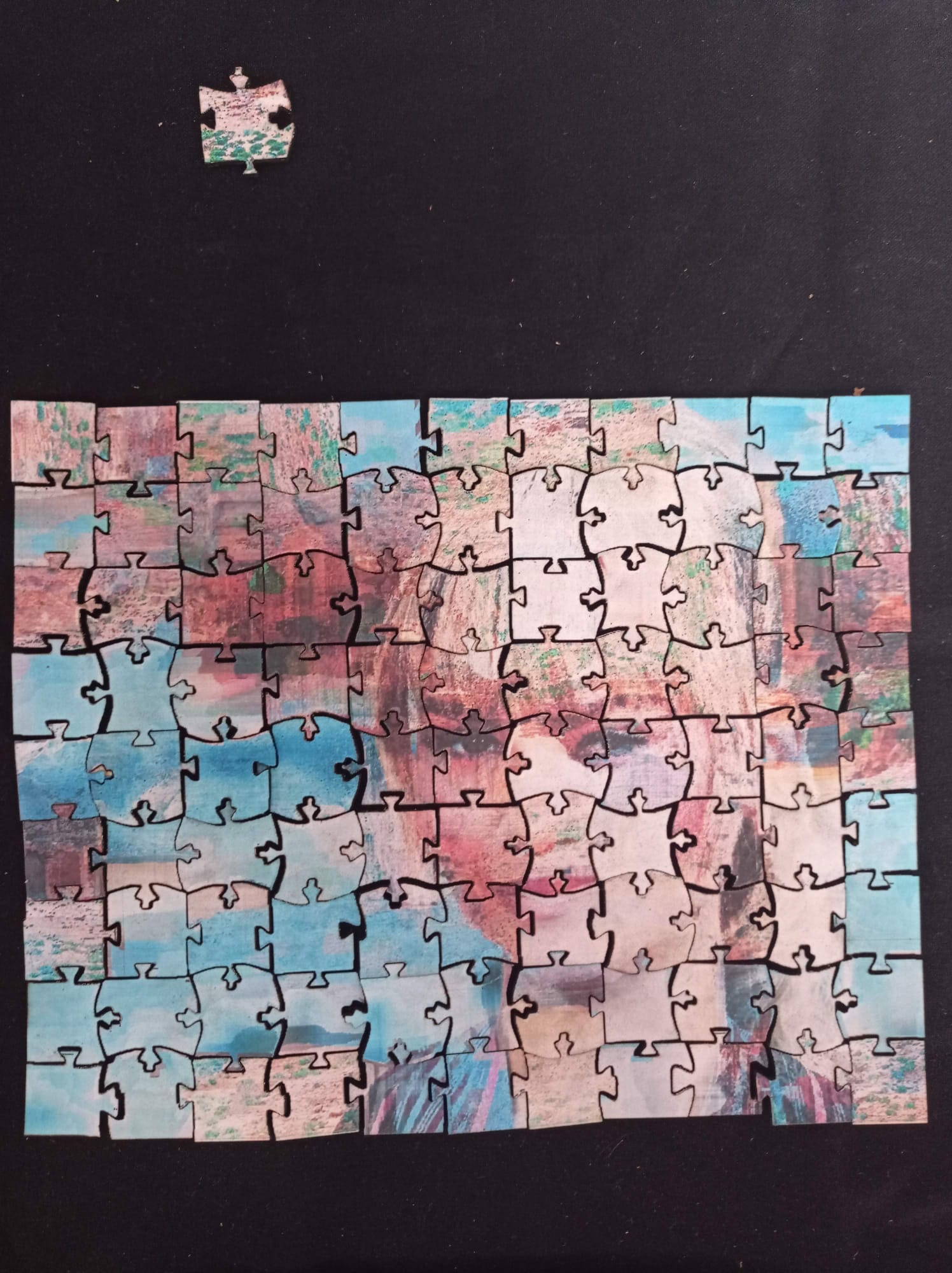
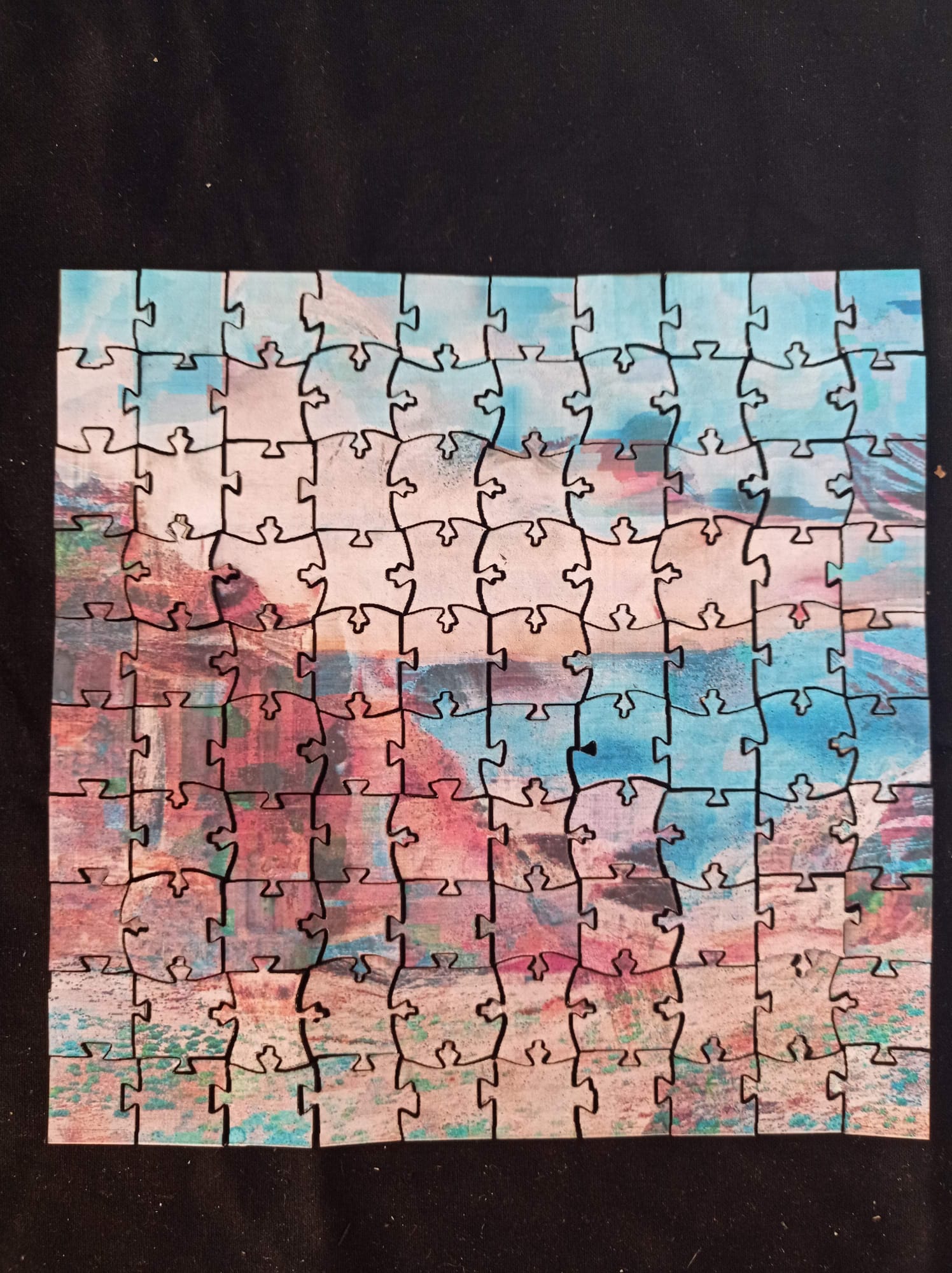
Same pieces?
Yes.
Every piece is as unique as possible.
Some edges must be shared.
That's not a limitation of the software.
It's a mathematical necessity (see here).
There are no duplicate pieces.
Nothing is flipped.
Nothing is hidden.
The exact same set builds two different complete images.
How many pieces?
As many as I want. Well, the minimum is obviously a 3 x 3 puzzle with another 4 x 2 one : the leftover piece is the one in the middle. With fewer pieces, you have to remove a border, and you can't remove only one piece on a border.
Here, the example uses about 100 pieces. I'll let you think about "about".
Which pictures?
Well, I'm presenting here the best results I got so far on a set I designed. But I may be a bad designer.
Nonetheless, gimme pictures -> you get an ambivalent puzzle.
You did it with AI
No.
This project doesn't need the current AI boom.
The generator is an old-fashioned algorithm written from scratch, with handy hands and sweaty swears.
No neural networks.
No diffusion models.
No LLMs.
Just graphs, geometry and optimization. It was designed on napkins stained with tomato sauce. It's a human-fashioned, dirty algorithm.
Can I discover a third solution?
No. No way. Or prove me wrong.
Why did you designed that?
I was with my kids. Assembling a computer, we finished with an extra screw : strange, because we previously disassembled this exact same computer. Checked everything. No hole for a screw. Everything was attached. Where did this screw came from ? My son noticed that the same thing occurs when you assemble some furniture from a swedish manufacturer. He joked : "Building furniture is like doing a jigsaw puzzle... except you always end up with one extra piece."
I laughed.
Then I wondered...
Could a puzzle actually work like that?
Can I get one?
With pleasure. Our Kickstarter will open in a few weeks. Stay tuned!